Skin Allergy vs Infection: Differences, Symptoms, and Treatment

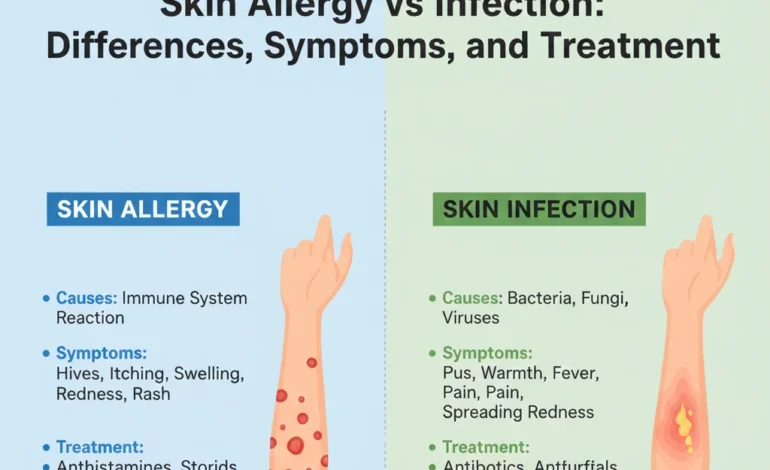
Skin is the largest organ of the body. It protects us from infections, allergens, and environmental stress. Sometimes, skin reacts to triggers, causing conditions that look similar but have different causes. Two common issues are skin allergy and skin infection. Understanding the differences helps in proper care and treatment. Experts at Skin Specialist guide patients on how to manage both conditions effectively.
What is a Skin Allergy?
A skin allergy occurs when the immune system overreacts to harmless substances called allergens. This reaction can appear anywhere on the skin. Allergies are not contagious, but they can cause discomfort if untreated.
Common Causes of Skin Allergy
- Pollen and dust: Can trigger red and itchy skin
- Cosmetics and skincare products: Harsh chemicals may cause reactions
- Food allergens: Nuts, seafood, and certain fruits can cause rashes
- Medications: Some drugs trigger allergic reactions
- Insect bites: Mosquito or bee stings may provoke skin reactions
Symptoms of Skin Allergy
- Redness and swelling
- Itchy rashes or hives
- Dry or flaky skin
- Small blisters in severe cases
Ingredients in Allergy Treatment
- Aloe vera: Soothes inflammation
- Chamomile extract: Reduces redness
- Calendula: Supports healing
- Oatmeal: Relieves itch
How to Use Allergy Treatments
- Clean the area with lukewarm water
- Apply a thin layer of cream twice daily
- Avoid scratching
- Use moisturizers to keep skin hydrated
Benefits of Allergy Treatment
- Reduces itching and redness
- Heals rashes faster
- Restores skin barrier
- Prevents secondary infections
What is a Skin Infection?
A skin infection happens when bacteria, viruses, or fungi invade the skin. Unlike allergies, infections are caused by microorganisms and can spread if untreated. Early treatment is essential to prevent complications.
Common Causes of Skin Infection
- Bacterial infections: Staphylococcus and Streptococcus bacteria
- Fungal infections: Ringworm, yeast infections
- Viral infections: Herpes simplex or warts
- Poor hygiene: Unclean skin or wounds
- Weakened immune system: Makes infection more likely
Symptoms of Skin Infection
- Redness with pus or fluid
- Pain or tenderness
- Warmth in the affected area
- Fever in severe cases
- Spreading rash
Ingredients in Infection Treatment
- Antibacterial creams: Tea tree oil or neem extract
- Antifungal creams: Clotrimazole or natural antifungal ingredients
- Antiviral ointments: Aloe vera or honey
How to Use Infection Treatments
- Clean the affected area gently
- Apply cream as advised
- Avoid tight clothing
- Maintain hygiene
Benefits of Infection Treatment
- Eliminates bacteria, fungi, or viruses
- Reduces pain and inflammation
- Prevents spreading
- Supports skin regeneration
Key Differences Between Skin Allergy and Skin Infection
| Feature | Skin Allergy | Skin Infection |
| Cause | Immune response to allergens | Bacteria, virus, or fungus |
| Contagious | No | Sometimes yes |
| Symptoms | Itching, hives, redness | Pus, pain, warmth, spreading |
| Onset | Sudden | Develops gradually |
| Treatment | Antihistamines, soothing creams | Antibiotics, antifungal, antiviral |
| Prevention | Avoid allergens, moisturize | Hygiene, wound care, immune support |
Diagnosis of Skin Allergy vs Skin Infection
Proper diagnosis ensures effective treatment. Skinspecialist uses various methods:
Allergy Diagnosis
- Skin prick test: Identifies allergens
- Patch test: Detects delayed reactions
- Blood tests: Measures immune response
Infection Diagnosis
- Swab test: Detects bacteria or fungi
- Blood tests: Check for systemic infection
- Visual examination: Evaluates rash pattern and progression
Treatment Options
Treating Skin Allergy
- Antihistamines to reduce itching
- Topical corticosteroids to calm inflammation
- Moisturizers to repair skin barrier
- Avoiding triggers to prevent flare-ups
Treating Skin Infection
- Bacterial infections: Antibiotic creams or oral antibiotics
- Fungal infections: Antifungal creams or tablets
- Viral infections: Antiviral ointments
- Supportive care: Clean wounds and maintain hygiene
Prevention Tips
Preventing Skin Allergy
- Avoid allergens
- Use gentle skincare products
- Keep skin hydrated
- Wear protective clothing in allergen-prone areas
Preventing Skin Infection
- Maintain clean and dry skin
- Avoid sharing personal items
- Treat minor wounds promptly
- Support immunity with a healthy diet
Final Thoughts
Differentiating between skin allergy and skin infection is essential for proper care. Allergies are immune reactions, while infections are caused by microorganisms. Experts at Skinspecialist recommend early diagnosis, targeted treatment, and preventive measures to maintain healthy skin. Using safe ingredients, applying treatments correctly, and avoiding triggers or unhygienic practices can improve skin health. Always consult a dermatologist for persistent or severe cases. Healthy skin starts with awareness and proper care.
FAQs
Can allergies lead to skin infections?
Yes, scratching allergic rashes can break the skin, allowing bacteria to enter.
How quickly do infections appear compared to allergies?
Allergies appear within minutes to hours. Infections may develop over days.
Are skin infections contagious?
Some infections, like fungal or bacterial ones, can spread through contact or shared items.
Can home remedies help?
Mild cases may respond to aloe vera, oatmeal baths, and gentle moisturizers, but severe cases need medical treatment.
When should I see a dermatologist?
Seek care if rashes persist, worsen, or show signs of infection like pus, severe pain, or fever.